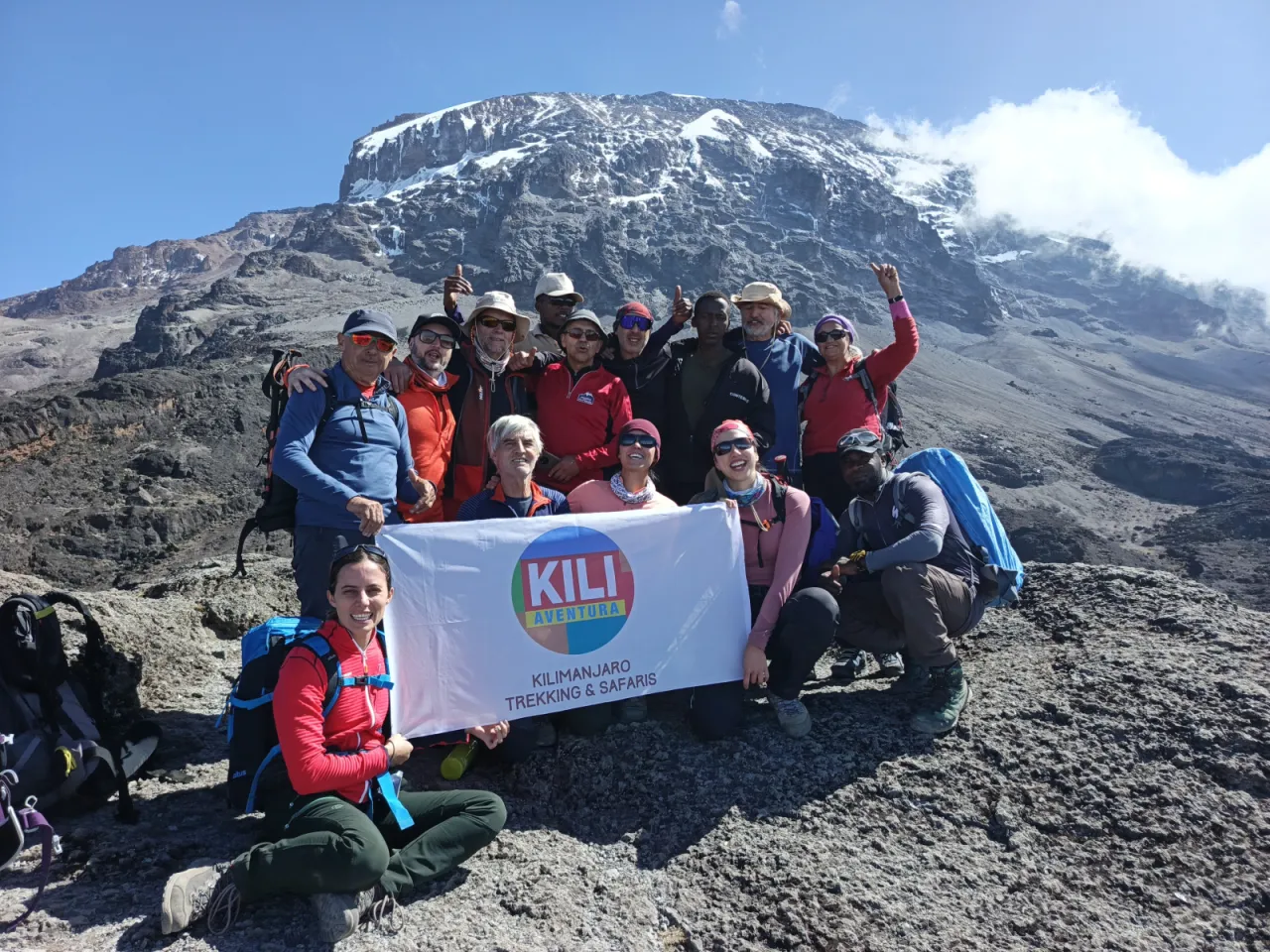
Climb Kilimanjaro With a Team That Knows the Mountain
Tanzania-based Kilimanjaro climbs and private safaris, planned and operated from Arusha.
- Local Tanzania operator
- Based in Arusha
- Private & group climbs
- Tailor-made safaris
Africa’s highest mountain, planned from Arusha
Kili Aventura is a Tanzania-based adventure travel company in Arusha. We plan and run Kilimanjaro climbs on every main route, and private safaris in the northern parks, on their own or combined into one trip.
Mount Kilimanjaro rises to 5,895 m at Uhuru Peak, and no technical climbing is needed on the standard routes. What decides how the climb feels is the route, and how many days you give your body to adjust to the altitude. So that is where we start: your dates, your experience and what you want from the mountain.
Every itinerary on this site shows the plan day by day, with camp altitudes and typical walking times, so you know what the climb involves before you ask us a single question.
Which Kilimanjaro route is right for you?
Answer four questions. We match them against each route’s length, acclimatisation, scenery, crowds and accommodation, and explain every suggestion.
Choose your route up Kilimanjaro
Every route ends at Uhuru Peak. They differ in length, scenery, crowds and how well they help you acclimatise.
Kilimanjaro in numbers
- Uhuru Peak, the highest point in Africa
- 5,895 m
- A typical climb, gate to gate
- 5–9 days
- Vegetation zones, from rainforest to arctic summit
- 5
- Listed as a UNESCO World Heritage Site
- 1987
Kilimanjaro itineraries
Day-by-day plans with the altitude of every camp and typical walking times.
More days on the mountain, better odds at the top
Time is the biggest factor in reaching the summit. Longer itineraries give your body the chance to adapt to the altitude, which is why seven or eight days suit most climbers.
How planning your climb works
From the first message to the gate, in four steps.
- Tell us your plans. Share your dates, who is coming, your hiking experience and whether you want to add a safari.
- Get a day-by-day plan. We suggest a route and itinerary that fit, and send a quote for your group.
- Prepare. Use our guides on training, packing and altitude, and ask us anything before you fly.
- Climb. Arrive in Tanzania, meet the team in Moshi or Arusha, and start walking.
The routes at a glance
Tanzania safaris
Tarangire, the Ngorongoro Crater and the Serengeti are a short drive from Arusha.
After the summit, rest your legs on safari
Many climbers add a few days in the northern parks after the climb, when sitting in a safari vehicle is exactly what tired legs need.
Climb and safari in one trip
Where we travel in Tanzania
Prepare for Kilimanjaro
Practical, sourced advice on training, packing, altitude and costs.
Questions we are often asked
How long does it take to climb Kilimanjaro?
Most climbs take five to nine days on the mountain, depending on the route. Seven or eight days suits most people, because the extra time helps your body adjust to the altitude. See the routes for the options.
When is the best time to climb Kilimanjaro?
The two dry seasons, roughly late June to October and January to early March, give the most reliable conditions. You can climb all year, but the long rains from about March to May make trails muddy and views cloudy.
Which Kilimanjaro route should I choose?
Start with how many days you have, then weigh scenery, crowds and accommodation. The route finder matches your answers to each route and explains why.
Can I combine a Kilimanjaro climb with a safari?
Yes. Many climbers spend a few days in Tarangire, the Ngorongoro Crater or the Serengeti after the climb. The parks are a short drive from Arusha, so both fit into one trip.
Ready to plan your climb?
Tell us your dates and group size. Our team in Arusha will reply with a route, an itinerary and a price.